
Most of the people in India don’t get enough sun exposure to maintain appropriate levels of Vitamin D. Office hours, sunscreen use, and darker skin pigmentation all lower down how much D3 your skin actually synthesises. The result? Roughly 70–80% of Indians are estimated to be Vitamin D deficient, many times without knowing it.
Strava Healthcare’s Vitamin D3 Softgel Capsule is a straightforward fix for it. Our each softgel provides cholecalciferol, which is the same form of Vitamin D that skin naturally makes, suspended in a carrier oil for better absorption in comparison to dry tablet formats.

Why Vitamin D3 (Not D2)?
There are two supplemental forms of Vitamin D they are:
D2 (ergocalciferol) and D3 (cholecalciferol). Research consistently demonstrates D3 raises and sustains blood levels more effectively. It’s the form your body produces, so it’s the form we use.
What It Does
Bone and Teeth Health:
Immune Support:
Muscle Function:
Mood Regulation:
Product Specifications
| Parameter | Details |
|---|---|
| Active Ingredient | Cholecalciferol (Vitamin D3) |
| Dosage Strengths | 1000 IU / 2000 IU / 5000 IU / 10000 IU / 60000 IU |
| Dosage Form | Softgel Capsule / Chewable tablets also available |
| Shell | Gelatin-based softgel |
| Storage | Cool, dry place. Avoid direct sunlight. |
| Shelf Life | 24 months from date of manufacture |
| Manufacturer | Strava Healthcare Private Limited |
Who Needs It
- People who spend prominent time in indoors
- Older adults (D3 synthesis in skin declines with age)
- Individuals with darker skin tones are probably living in northern latitudes or polluted urban areas
- Vegetarians and vegans, because D3 is commonly found in some fish and egg yolks
- Women’s who are Pregnant and breastfeeding
- Anyone with a confirmed deficiency on a serum 25(OH)D test
Dosage & Usage
Take one softgel daily with a meal which contains fat. Vitamin D3 is fat-soluble, so absorption improves significantly when taken alongside dietary fat a handful of nuts, a glass of whole milk, or a regular cooked meal.
For therapeutic correction of deficiency, higher doses (typically 5000 IU daily for 8–12 weeks) are used under medical supervision. Once levels are corrected, a maintenance dose of 1000–2000 IU daily is typical. 60000 IU is once a week dosage.
Always needs to go by what your doctor prescribes based on your blood reports.
Manufacturing Quality
Strava Healthcare produces Vitamin D3 Softgel Capsules under GMP-certified conditions. Each batch is tested for:
- Potency (actual IU content matches label claim)
- Dissolution rate
- Microbiological purity
- Heavy metal limits
- Moisture and peroxide value of the carrier oil
For B2B & Pharma Partners
- Contract Manufacturing (CMO/CDMO): tailored strengths, branding, and packaging
- Private Label: Purely Ready to sell solutions with your brand on the label
- Bulk Supply: For pharma distributors, hospital chains, and export markets
Frequently Asked Question
Yes. At doses of 1000–2000 IU, daily supplementation is safe for most of the adults. Doses above 4000 IU daily over extended periods should be supervised by a doctor.
Vitamin D3 supplementation is routinely recommended during pregnancy. The usual dose is 1000–2000 IU/day, but one needs to follow the gynaecologist’s instructions based on test levels.
These softgels are completely formulated for adults. Pediatric Vitamin D3 drops or chewables are suitable for children. Need to consult a paediatrician about appropriate dosing.
Vitamin D3 can interact with certain medications, including thiazide diuretics, steroids, and some weight-loss drugs. If you’re on long-term medication, check with your doctor before starting supplementation.
Blood levels of 25(OH) D typically normalise within 8–12 weeks of consistent supplementation. Energy, mood, and muscle symptoms often improve within that window, though individual responses vary.
Omega-3 Softgel Capsules Manufacturer in India
The evidence for omega-3s is genuinely solid in some areas and genuinely overhyped in others. EPA and DHA the two marine fatty acids that do the actual clinical work have consistent data behind cardiovascular benefits, but only at therapeutic doses: 1–4 g/day of combined EPA+DHA. The general wellness market routinely sells products at a fraction of that and then doesn’t understand why the outcomes don’t match the research. Dose matters. Source matters. Concentration matters.
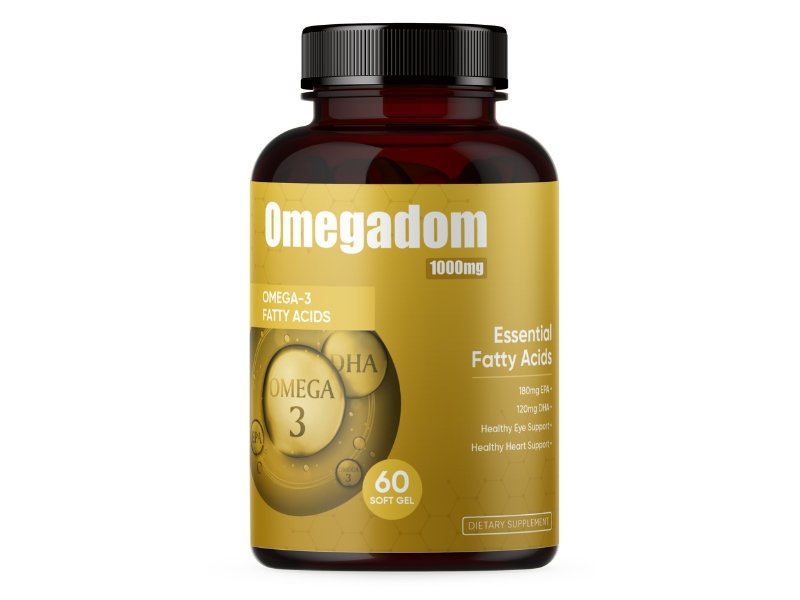
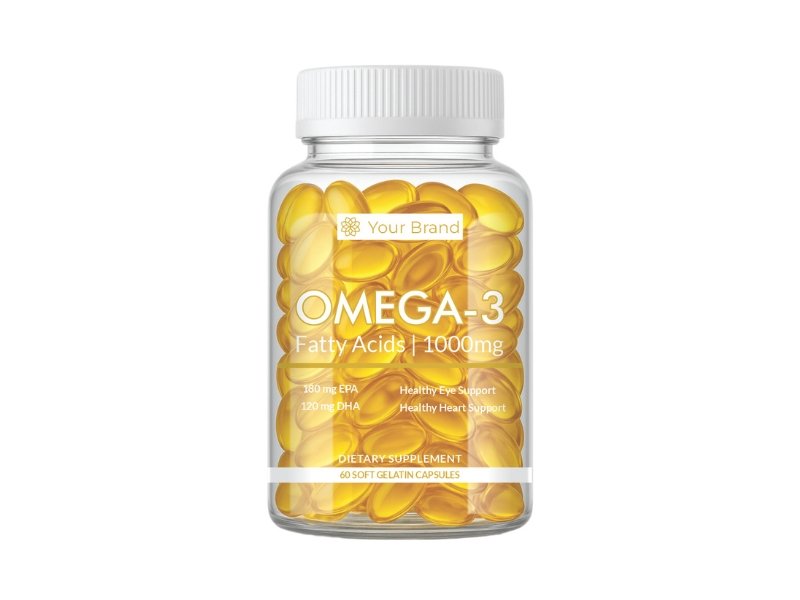
Strava Healthcare manufactures omega-3 softgel capsules in India using fish oil concentrated to pharmaceutical-grade EPA+DHA levels, in standard and high-concentration formats, for nutraceutical brands, pharmaceutical companies, and private label buyers.
Omega-3 Soft gels are growing in demand in the countries like United Kingdom, Myanmar, Thailand, Philippines, Ghana, Laos, Malaysia, Nigeria, Algeria, Morocco, Oman, Guatemala, Panama, Ecuador, Honduras, Bolivia, Peru and Paraguay.
EPA and DHA What They Actually Do
EPA (eicosapentaenoic acid) is the primary anti-inflammatory fatty acid in the omega-3 family. It competes with arachidonic acid in eicosanoid synthesis, shifting the balance toward less inflammatory mediators. If you’re formulating for triglyceride reduction or cardiovascular risk, EPA is the one doing most of that work.
DHA (docosahexaenoic acid) is structural — a major component of neuronal membranes, the retina, and sperm. It accounts for a large fraction of polyunsaturated fat in brain grey matter. Prenatal and infant cognitive development, visual development, and neuroprotective applications are all DHA territory. Most clinical situations benefit from both together, though inflammatory and cardiovascular applications tend to respond better to EPA-dominant ratios.
Where It's Used
Hypertriglyceridaemia is the best-documented clinical application at therapeutic doses. Secondary cardiovascular prevention has solid evidence behind it. Prenatal supplementation for foetal brain and retinal development is standard of care in many markets. Cognitive support in older adults, rheumatoid arthritis adjunct therapy, dry eye management, and sports recovery round out the common formulation targets.
A Note on Manufacturing
Fish oil is one of the harder raw materials to work with in softgel production. Peroxidation is a real problem — poorly stored or processed fish oil goes rancid in ways that aren’t always obvious to the end consumer but show up clearly in peroxide and anisidine values. We use nitrogen-flushed encapsulation to cut down oxidation during manufacturing.
Every batch is tested for EPA and DHA potency (measured against actual content, not estimated from label), peroxide value, anisidine value, mercury, lead, arsenic, cadmium, and microbiological purity. PCBs and dioxins tested on request. Third-party COAs for all batches.
For B2B and Pharma Buyers
Contract manufacturing with custom EPA: DHA ratios, gelatin type, and enteric coating on request. Private label products ready to market. Bulk supply for pharma distributors and export.
Product Specifications
| Parameter | Details |
|---|---|
| Active Ingredient | Fish oil concentrate (EPA + DHA as triglycerides or ethyl esters) |
| Standard strength | 1000 mg fish oil — 180 mg EPA / 120 mg DHA per softgel |
| High concentration | 500 mg EPA + 250 mg DHA per softgel (or custom ratio) |
| Dosage Form | Softgel capsule |
| Shell | Gelatin-based — bovine or fish gelatin, specify at enquiry |
| Pack sizes | 30s, 60s, 90s bottle; bulk drums |
| Shelf Life | 24 months |
| Storage | Below 25°C, away from light |
Frequently Asked Questions
A standard 1,000 mg fish oil softgel delivers around 300 mg of combined EPA+DHA — roughly 30% concentration. Concentrated fish oil gets that to 60–90% in the same capsule size. For anyone trying to hit therapeutic doses for triglyceride lowering or cardiovascular protection, the concentrated form means fewer capsules per day. For general wellness where the dose threshold is less critical, standard concentration is fine.
Yes, somewhat. Triglyceride (TG) form is how omega-3s naturally occur in fish. Re-esterified triglycerides (rTG) are processed but return to TG form. Ethyl esters (EE) are cheaper and dominate the pharmaceutical market — absorbed a bit less efficiently, but with real clinical data behind them at therapeutic doses. For premium product positioning and better bioavailability, rTG is worth the extra cost. For a mainstream product, EE is perfectly serviceable.
Yes. Enteric coating delays release until the small intestine and eliminates the fishy aftertaste that drives non-compliance. It adds cost, but for a daily-use product it often pays for itself in retention.