
Strava Healthcare manufactures famotidine tablets in India for pharmaceutical distributors, hospital pharmacies, and export markets. Famotidine is an H2 blocker it cuts gastric acid by blocking histamine at the parietal cell. It is not a PPI. It works faster for acute symptoms, and patients do not need to take it before meals. It is on the WHO Essential Medicines List.
Batches are GMP-certified, with assay, dissolution, content uniformity, and microbiological purity testing run on each lot. COAs and batch records come standard. Famotidine is emerging demand in LATAM market like Costa Rica, Ecuador, Guatemala, and Honduras.
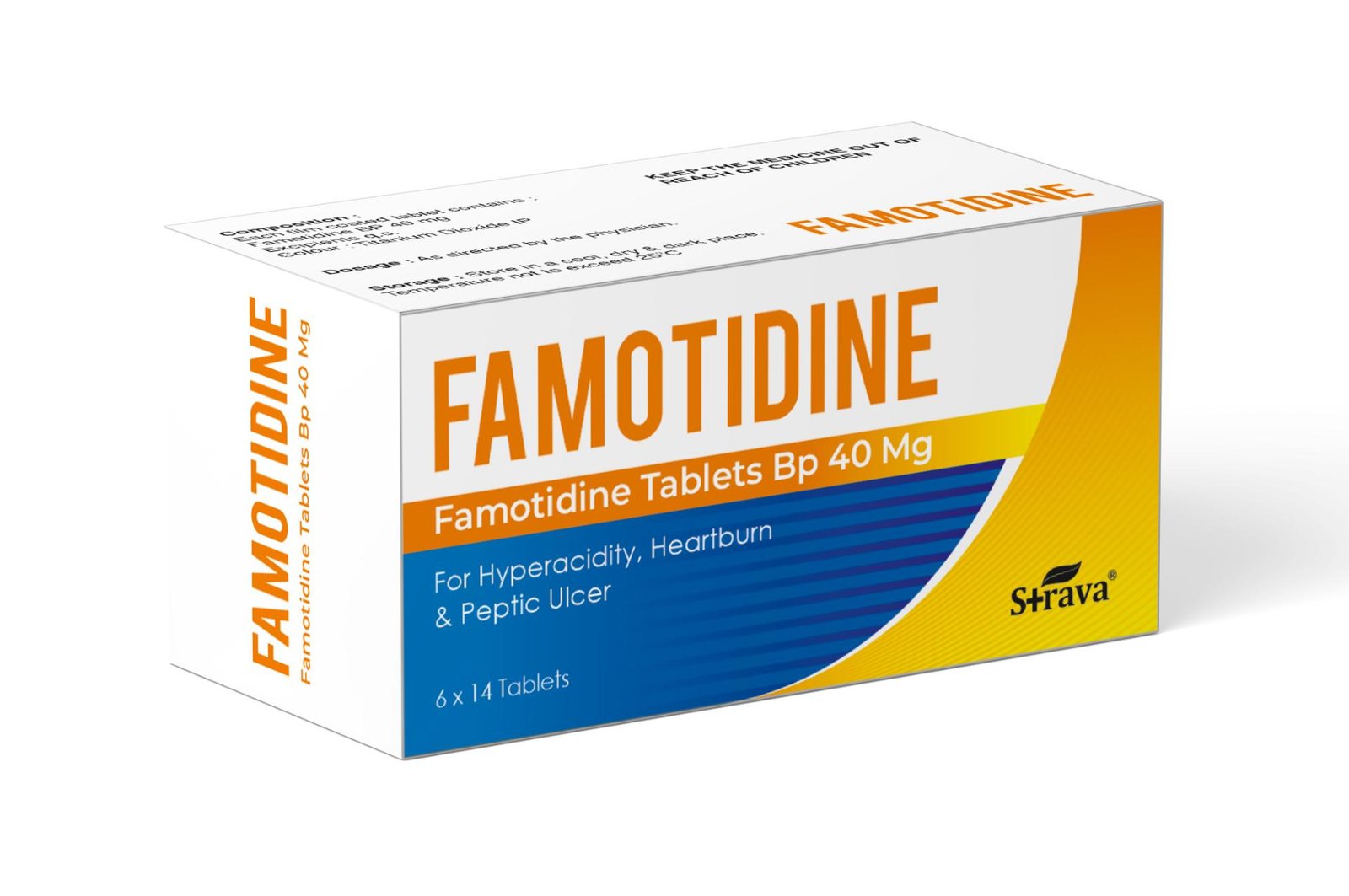
Indications
- Gastroesophageal reflux disease (GERD) and heartburn
- Peptic and duodenal ulcers — treatment and maintenance
- Zollinger-Ellison syndrome
- Stress ulcer prevention in hospitalised patients
- OTC heartburn relief (20 mg formulations)
For B2B and Pharma Partners
- Contract manufacturing with custom strengths, branding, and packaging
- Private label: market-ready famotidine tablets
- Bulk supply for domestic distributors and export
Product Specifications
| Parameter | Details |
|---|---|
Active Ingredient | Famotidine |
Strengths | 20 mg / 40 mg |
Dosage Form | Film-coated tablet |
Packaging Sizes | Blisters of 10s, 14s; bottles of 100s, 500s |
Storage | Below 30°C, away from moisture and light |
Shelf Life | 36 months |
Manufacturer | Strava Healthcare Private Limited |
Frequently Asked Questions
Famotidine kicks in within an hour or two. Omeprazole needs a few days to build up before it does much. If someone has heartburn right now, famotidine is the more useful choice. For managing chronic GERD or healing an ulcer, a PPI is usually what gets prescribed. Some clinicians use both — famotidine for breakthrough symptoms while the PPI gets up to speed.
Dose adjustment is needed when creatinine clearance drops below 50 mL/min. Standard doses in that range will accumulate. Worth checking in elderly patients especially — renal function often looks better on paper than it actually is. Current dosing guidelines have the specifics.
Yes. Packaging and labelling are configured for OTC or prescription distribution depending on what the destination market requires.